Monday Morning Masonic Facts - pt5
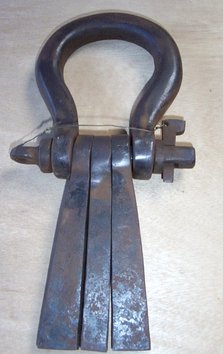


In Freemasonry, a Lewis is traditionally defined as the son of a Freemason. The term originates from operative stonemasonry, where a Lewis is a metal lifting device used to raise heavy blocks of stone by fitting into a specially cut cavity. When Freemasonry transitioned from an operative craft to a speculative and symbolic fraternity, many of its tools and practices were retained as allegories, and the Lewis became one such symbol.
Symbolically, the Lewis represents strength, support, and continuity. Just as the Lewis enables a mason to lift and position heavy stones, the son of a Mason was metaphorically seen as one who would support his father later in life, particularly in old age. This reflects the historical reality that, before modern social systems, parents often relied on their children for care and stability. The symbolism therefore reinforces ideals of familial duty, gratitude, and intergenerational responsibility within the Masonic tradition.
While the concept of a Lewis is well established in English-speaking and European Masonic jurisdictions, its practical significance varies. In some traditions, a Lewis may be permitted to be initiated at a younger age than other candidates, though this is not universal and depends on the governing Grand Lodge. Modern Freemasonry emphasises moral character and personal qualification over lineage, but the symbolism of the Lewis remains an enduring reminder of the fraternity’s roots in stonemasonry and its broader values of support, continuity, and care across generations.
If you would like to be part of a global community that has its roots firmly in the ground in Buckinghamshire, please join us by following this link: https://buckspgl.org/join
Symbolically, the Lewis represents strength, support, and continuity. Just as the Lewis enables a mason to lift and position heavy stones, the son of a Mason was metaphorically seen as one who would support his father later in life, particularly in old age. This reflects the historical reality that, before modern social systems, parents often relied on their children for care and stability. The symbolism therefore reinforces ideals of familial duty, gratitude, and intergenerational responsibility within the Masonic tradition.
While the concept of a Lewis is well established in English-speaking and European Masonic jurisdictions, its practical significance varies. In some traditions, a Lewis may be permitted to be initiated at a younger age than other candidates, though this is not universal and depends on the governing Grand Lodge. Modern Freemasonry emphasises moral character and personal qualification over lineage, but the symbolism of the Lewis remains an enduring reminder of the fraternity’s roots in stonemasonry and its broader values of support, continuity, and care across generations.
If you would like to be part of a global community that has its roots firmly in the ground in Buckinghamshire, please join us by following this link: https://buckspgl.org/join