
5 Noble Orders Of Architecture – Pt4
TUSCAN
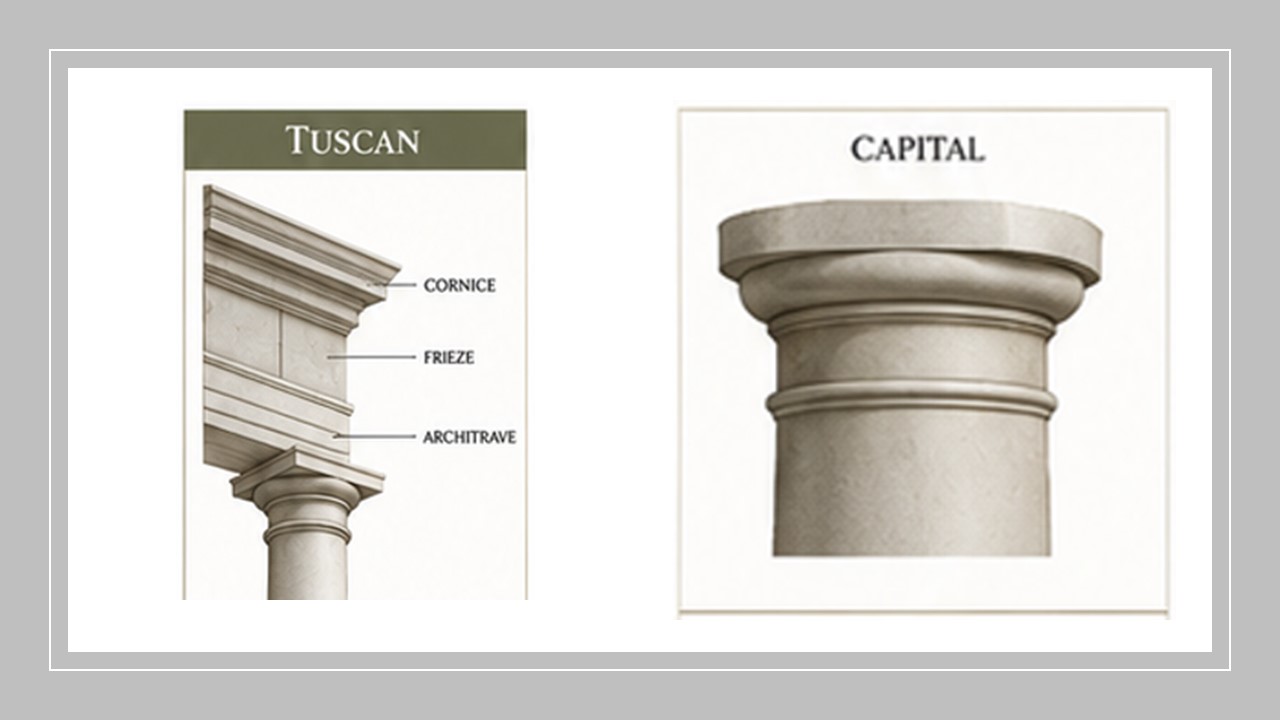
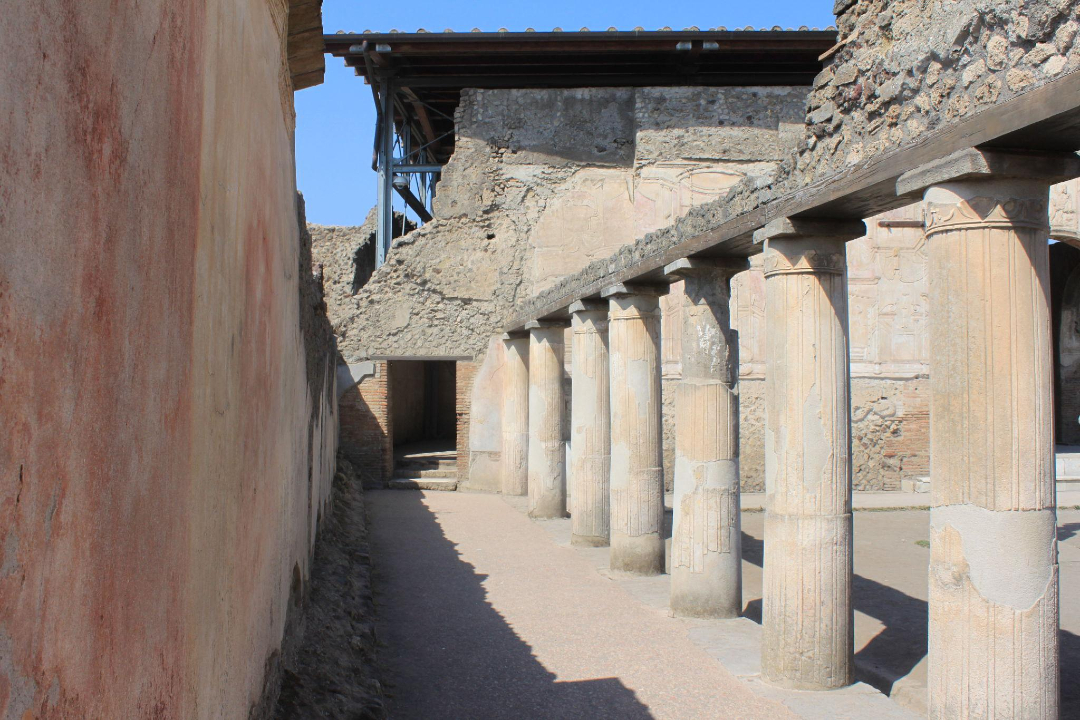
The Tuscan order is the simplest of the five classical orders of architecture and is generally regarded as a Roman adaptation of the Greek Doric order. Developed in ancient Italy and associated with the Etruscan and later Roman traditions, it is characterised by plain, unfluted columns, simple capitals, a smooth shaft, and minimal ornamentation. Compared with the Doric order, the Tuscan order appears even more restrained and practical, emphasizing strength, utility, and clarity of form rather than decorative detail. Because of its robust simplicity, it was frequently used by Roman architects for military buildings, warehouses, gates, and structures where dignity was desired without excessive embellishment.
The Tuscan order was formally codified during the Renaissance by architectural writers such as Sebastiano Serlio and Andrea Palladio, who included it among the five classical orders. It became particularly popular in Georgian, Palladian, and Neoclassical architecture, where its understated appearance suited country houses, civic buildings, and entrance porticos. The order is often chosen when architects wish to convey solidity, restraint, and timeless elegance without the decorative richness of the Ionic, Corinthian, or Composite orders.
Where Masonic authors have assigned meaning to the Tuscan order, it is often associated with simplicity, practicality, humility, and strength through restraint. Its plain appearance makes it a useful metaphor for honest workmanship and functional design.
Notable UK Examples
The Tuscan order became especially popular during the Georgian and Palladian periods in Britain, where it was frequently used for garden buildings, country houses, entrance lodges, stables, and lower storeys.
Chiswick House - One of Britain's finest Palladian villas, incorporating Tuscan columns in subsidiary structures and service areas.
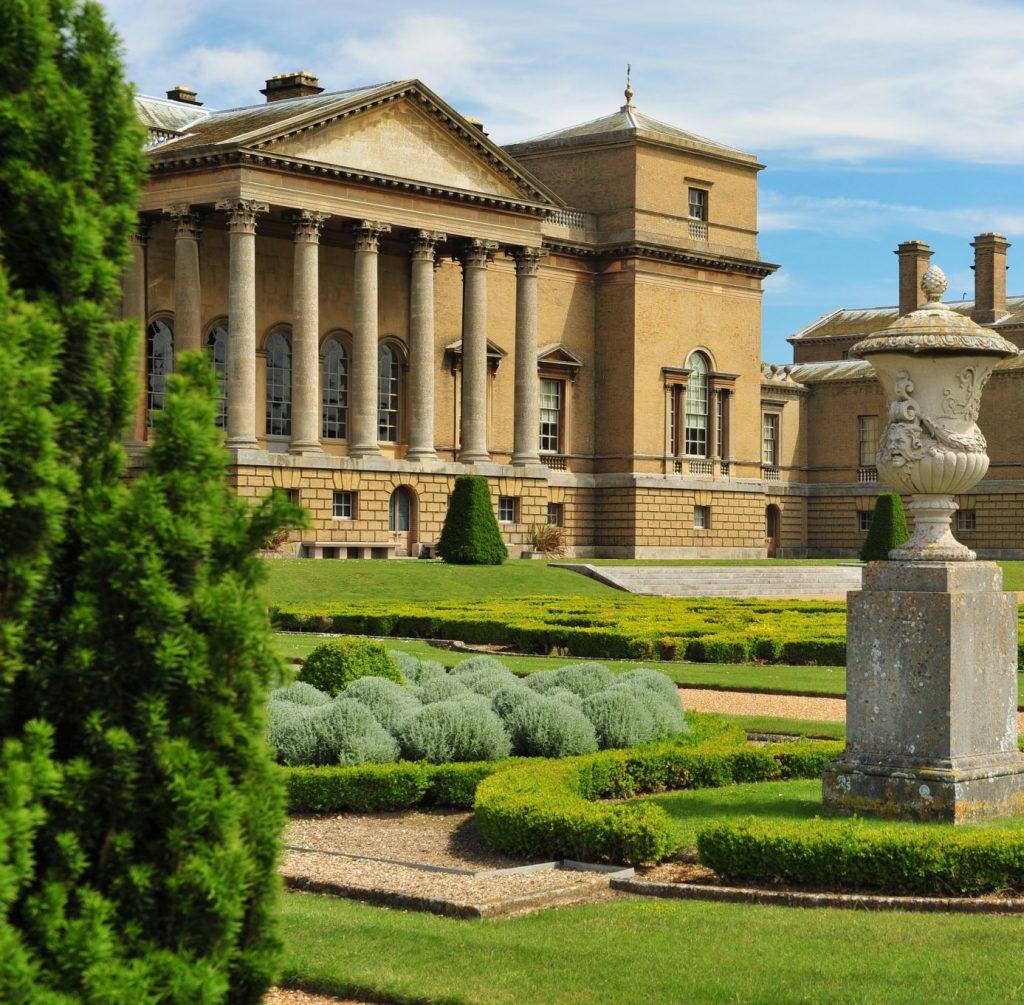
Holkham Hall - A masterpiece of Palladian architecture where Tuscan elements are used to express strength and restraint.
Kedleston Hall - Features Tuscan columns in parts of the service courts and ancillary buildings, contrasting with more ornate orders elsewhere.
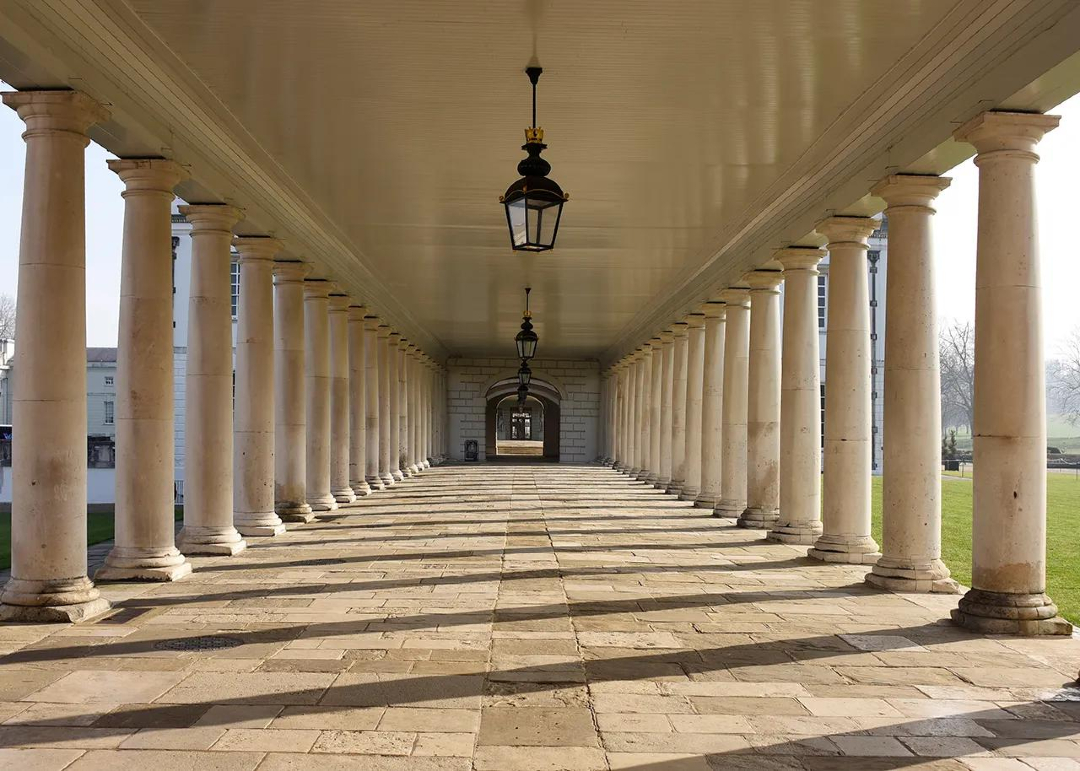
The Queen's House - Uses restrained classical detailing that reflects Tuscan principles in portions of its design.
Buckingham Palace - Certain service and courtyard areas historically employed Tuscan-style columns where simplicity and robustness were preferred.
If you would like to be part of a global community that has its roots firmly in the ground in Buckinghamshire, please join us by following this link: https://buckspgl.org/join?
The Tuscan order is the simplest of the five classical orders of architecture and is generally regarded as a Roman adaptation of the Greek Doric order. Developed in ancient Italy and associated with the Etruscan and later Roman traditions, it is characterised by plain, unfluted columns, simple capitals, a smooth shaft, and minimal ornamentation. Compared with the Doric order, the Tuscan order appears even more restrained and practical, emphasizing strength, utility, and clarity of form rather than decorative detail. Because of its robust simplicity, it was frequently used by Roman architects for military buildings, warehouses, gates, and structures where dignity was desired without excessive embellishment.
The Tuscan order was formally codified during the Renaissance by architectural writers such as Sebastiano Serlio and Andrea Palladio, who included it among the five classical orders. It became particularly popular in Georgian, Palladian, and Neoclassical architecture, where its understated appearance suited country houses, civic buildings, and entrance porticos. The order is often chosen when architects wish to convey solidity, restraint, and timeless elegance without the decorative richness of the Ionic, Corinthian, or Composite orders.
Where Masonic authors have assigned meaning to the Tuscan order, it is often associated with simplicity, practicality, humility, and strength through restraint. Its plain appearance makes it a useful metaphor for honest workmanship and functional design.
Notable UK Examples
The Tuscan order became especially popular during the Georgian and Palladian periods in Britain, where it was frequently used for garden buildings, country houses, entrance lodges, stables, and lower storeys.
Chiswick House - One of Britain's finest Palladian villas, incorporating Tuscan columns in subsidiary structures and service areas.
Holkham Hall - A masterpiece of Palladian architecture where Tuscan elements are used to express strength and restraint.
Kedleston Hall - Features Tuscan columns in parts of the service courts and ancillary buildings, contrasting with more ornate orders elsewhere.
The Queen's House - Uses restrained classical detailing that reflects Tuscan principles in portions of its design.
Buckingham Palace - Certain service and courtyard areas historically employed Tuscan-style columns where simplicity and robustness were preferred.
If you would like to be part of a global community that has its roots firmly in the ground in Buckinghamshire, please join us by following this link: https://buckspgl.org/join?